
News
Consultative and Diagnostic Assistance of KMU to Children in Rural Areas
27 January 2026
In accordance with the instructions of the President of the Republic of Kazakhstan, Kassym-Jomart Tokayev, announced at the IV session of the National Kurultai, support for young citizens of the country with developmental disabilities and the protection of health from the very beginning of life have been emphasized among the key priorities of state policy. The importance of conducting screening assays and their priority at the national level is reflected in the law on social and medical-educational support for children with special needs. Conducting developmental screening in children is one of the systemic measures highlighted by the Minister of Healthcare of the Republic of Kazakhstan, A. Alnazarova, aimed at identifying developmental disabilities at early stages in order to provide early intervention.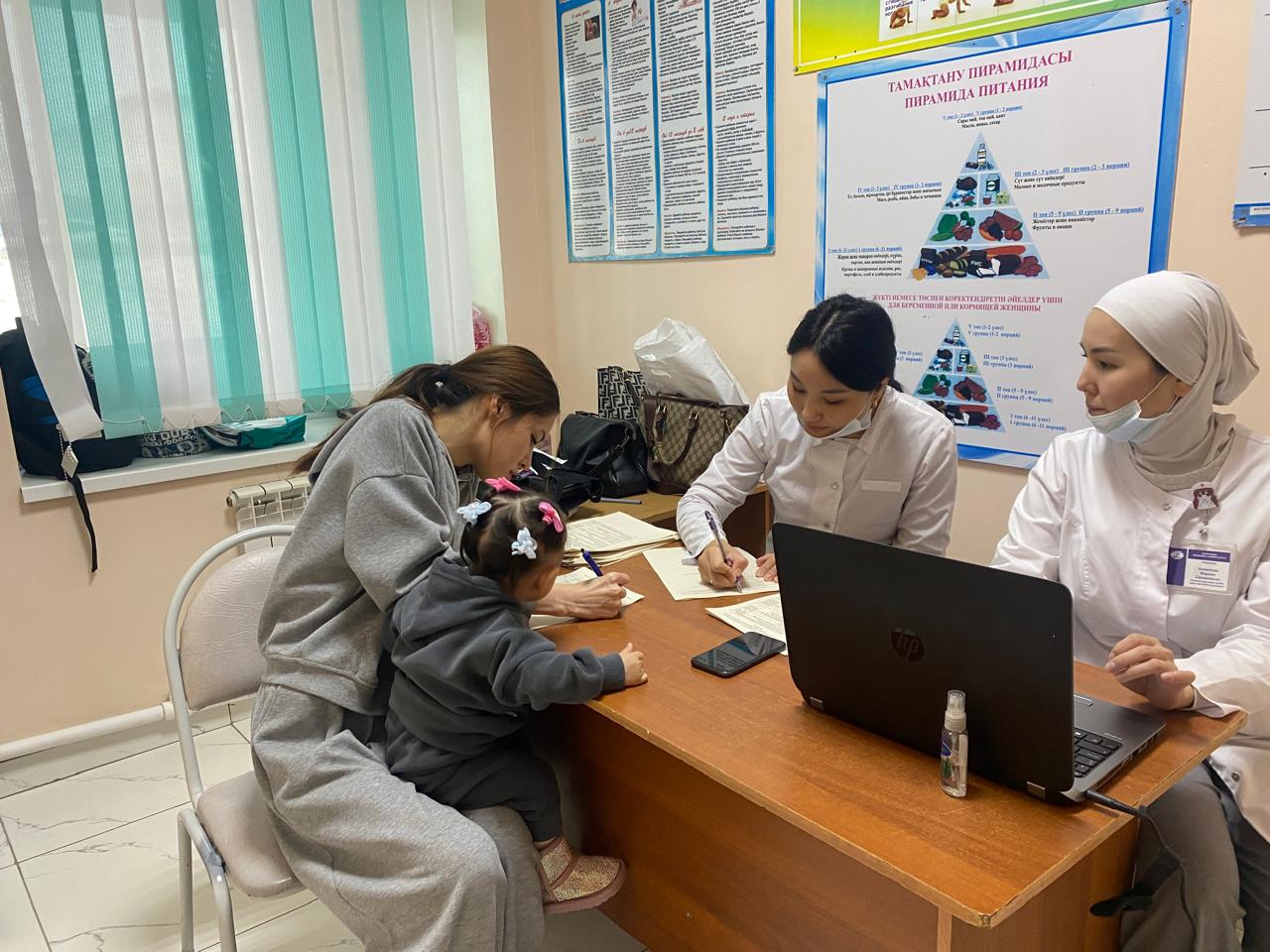
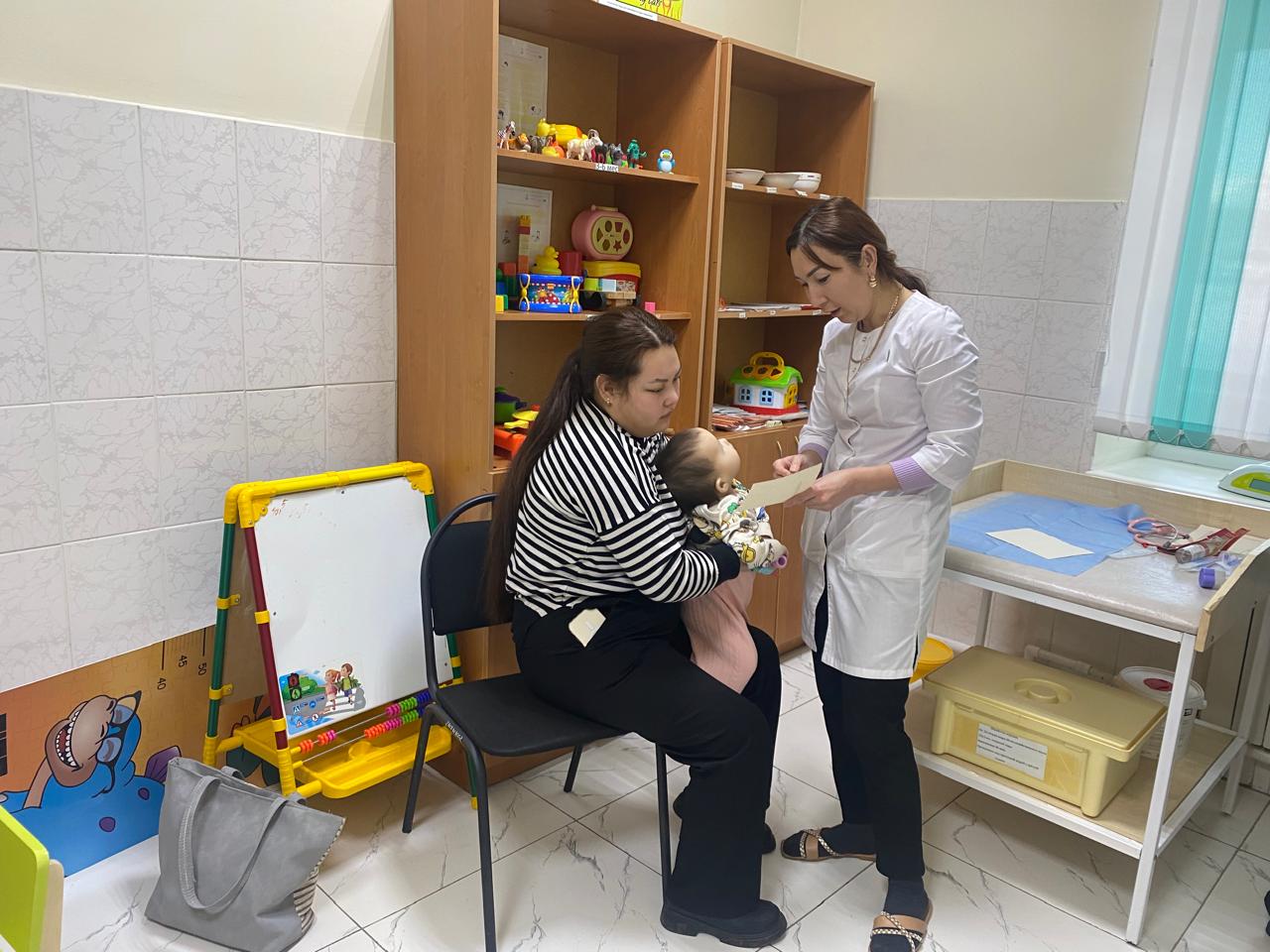
On January 22–23, 2026, faculty members and medical residents from the Department of Pediatrics and Neonatology of Karaganda Medical University paid visits to the Bukhar-Zhyrau and Shet districts of the Karaganda region to conduct developmental screening. The event was organized with the support of the Department of Healthcare of the Karaganda region with the goal of early detection of abnormalities in physical, psychomotor, and speech development, within the framework of consultative and diagnostic assistance provided by Karaganda Medical University to children in rural areas.
Currently, in accordance with the recommendations of World Health Organization (UNICEF) and the experience of leading early childhood development specialists in Kazakhstan, amendments have been introduced to legal acts governing the conduct of child screening. At the present time, screening includes parent questionnaires and assessment of developmental skills depending on the child’s age.
On the initial stage of this work, 98 children under the age of three from the above-mentioned districts were screened. Areas assessed included gross and fine motor skills, speech development, sensory and social development. In the Bukhar-Zhyrau district, owing to the participation of an educational psychologist from the Rehabilitation Center of the Multidisciplinary Regional Children’s Hospital in the outreach team, comprehensive developmental assessments were conducted. The examinations were based on observation and standardized diagnostic play norms, and recommendations were provided.
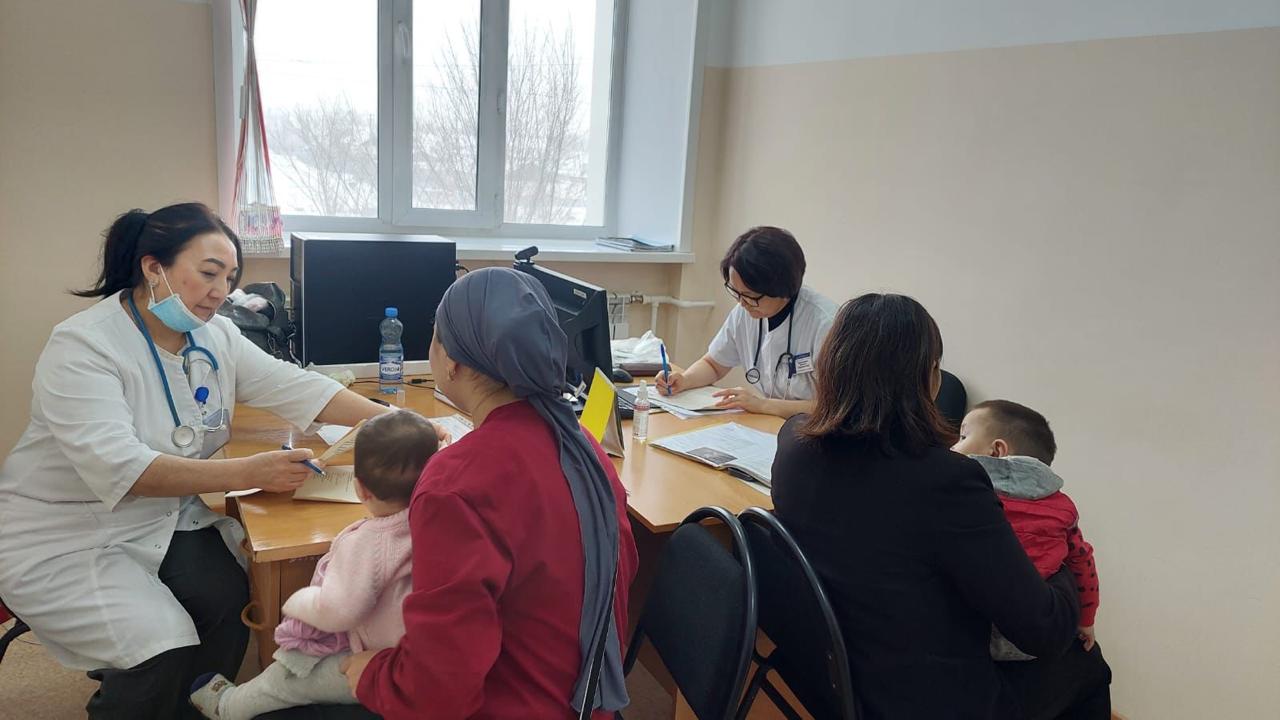
During the screening process, consultations were also held with the legal representatives of the children on issues of nutrition and the introduction of supplementary food in early childhood, in accordance with updated WHO nutritional guidelines. Together with a pediatrician in the Bukhar-Zhyrau district, discussions were held on vaccination and its importance, primarily for protection. Modern approaches and interpersonal communication tools in vaccination counseling, based on active listening skills, were applied.
Significant assistance in the work was provided by pediatric residents of the group 9-002, T.G. Salikov and A.Kh. Nurtazina, and group 9-001, A.E. Kural and M.S. Akhmetova, who, together with faculty members, directly participated in the screening, assessed children’s physical development, and conducted parent questionnaires. Medical resident T.G. Salikov, winner of the international competition “Best Student of the CIS 2025,” noted that he gained considerable experience in conducting screenings and in teamwork with department's faculty members and medical professionals.
Overall, the experience of cooperation between our university and medical organizations of the Karaganda region is being implemented to support and accompany young children and their families. The Director of the Central District Hospital of the Bukhar-Zhyrau district, K.B. Mustafin, organized a meeting with general practitioners and a pediatrician, during which the Head of the Department of Pediatrics and Neonatology, B.T. Tukbekova, presented the content of the 2023 Pocket Guide, including updated protocols for providing emergency care to children and adolescents, and answered colleagues’ questions. He also shared impressions regarding the organization of Development and Early Intervention Centers, including visiting services, taking into account the resources of rural healthcare.
News feed
Published:
12.05.2026
Published:
08.05.2026
Published:
06.05.2026
Published:
06.05.2026
Published:
04.05.2026
Published:
04.05.2026
Published:
29.04.2026
Published:
27.04.2026
Published:
27.04.2026
Published:
27.04.2026
Published:
27.04.2026
Published:
24.04.2026
Published:
21.04.2026
Published:
21.04.2026
Published:
21.04.2026
Published:
21.04.2026
Published:
20.04.2026
Published:
20.04.2026
Published:
14.04.2026
