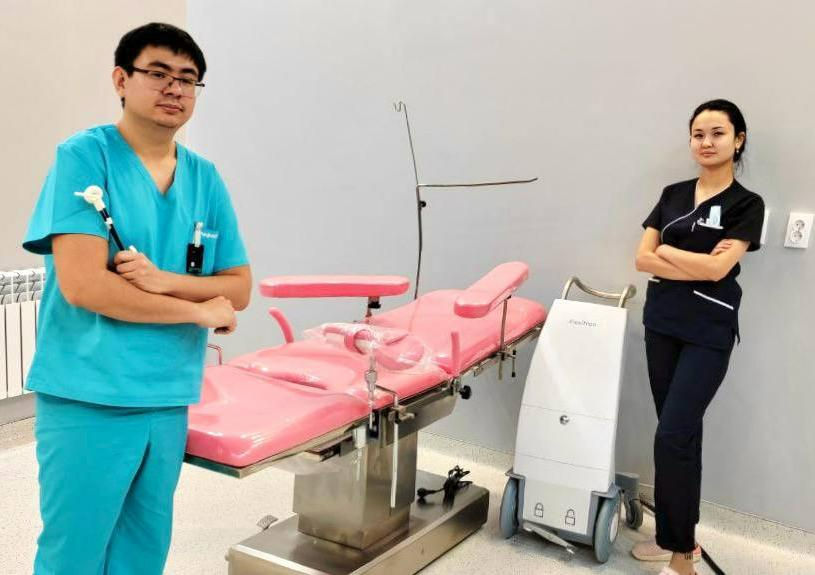
Radiation oncology
Group of educational programs: Radiation Oncology
Cipher: 7R01111
Duration of study: 2 years, 140 credits
Admission conditions: availability of higher medical education, internship, or a document indicating the qualification of a "doctor" in the program of higher medical education, a doctor's certificate, an entrance exam according to the Admission Policy of students
Tuition fee for 1 year: 2 000 000 tenge
Mission
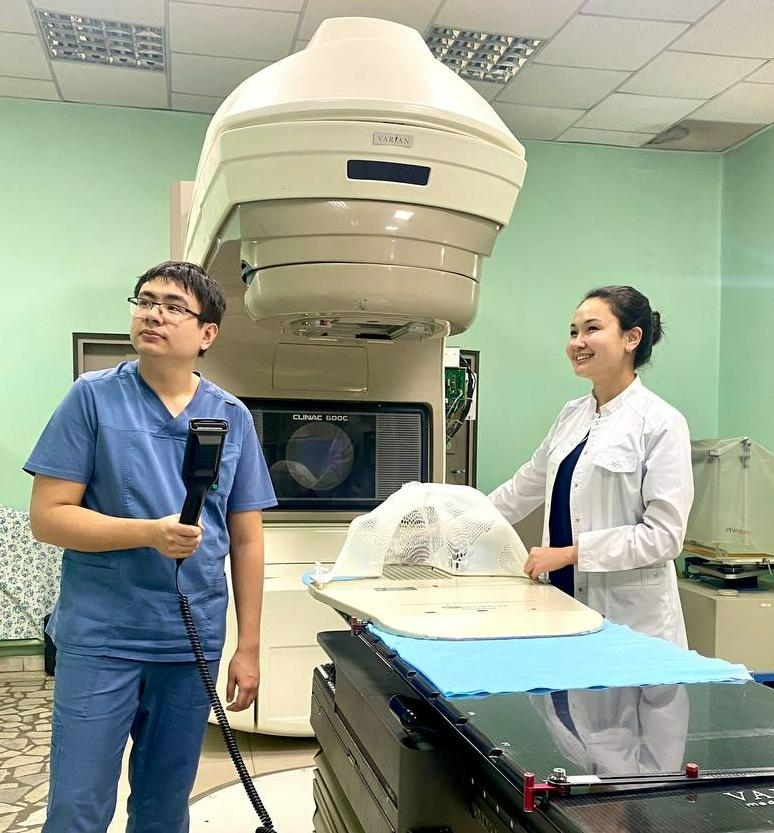
Education and training of doctors in the specialty radiation oncology at a level at which they will independently competently perform all basic clinical duties. They are able to independently determine the indications for radiation treatment, conduct pre-radiation training, apply remote and contact radiation methods in practice, conduct courses of chemo-radiation treatment, evaluate and predict the development of treatment complications.
What will you learn?
- Education and training of doctors in the specialty radiation oncology at a level at which they will independently competently perform all basic clinical duties;
- They are able to independently determine the indications for radiation treatment;
- Conduct pre-radiation training;
- To apply remote and contact irradiation methods in practice;
- To conduct courses of chemo-radiation treatment;
- Evaluate and predict the development of treatment complications.
Final learning outcomes
- Perform a clinical assessment of the patient's condition, a physical examination. The ability to integrate pathology and imaging data, determine the stage and prognostic factors, and the multidisciplinary goal of treatment.
- Develop a radiation therapy plan, a prescription for radiation therapy, determine the treatment method, energy, fractionation.
- Perform positioning and immobilization, contouring of targets and risk organs, and evaluate a treatment plan.
- Conduct irradiation sessions with proper dose delivery, verify the accuracy of the installation for irradiation based on portal visualization.
- To assess the toxicity of treatment based on clinical and laboratory signs, the degree of tumor regression. The ability to conduct accompanying therapy.
- Work in a team, including an advisory role, in most clinical situations.
- Communicate with patients and their families to explain the diagnosis, plan treatment, discuss the risks and benefits of radiation therapy and the expected results.
- Work with members of the treatment team, including technicians, physicists, and nursing staff to coordinate and deliver treatment.