
Pathological anatomy
Group of educational programs: R050 Pathological anatomy
Cipher: 7R01145
Duration of study: 2 years, 140 credits
Admission conditions: availability of higher medical education, internship, or a document indicating the qualification of a "doctor" in the program of higher medical education, a doctor's certificate, an entrance exam according to the Admission Policy of students
Tuition fee for 1 year: 2 000 000 tenge

Stabayeva Leila Medeubayevna
Head of educational program
 +7 7212 503930, ext.1584
Mission
Training of qualified, competitive pathologists capable of performing pathoanatomic diagnostics, scientific research and continuing professional development, as well as self-development throughout their work.
What will you learn?
1st year
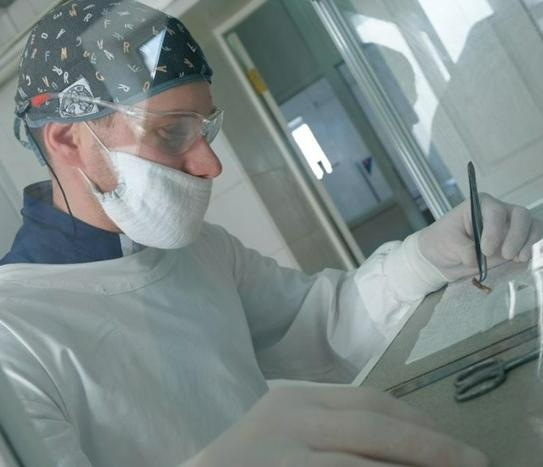
- Assistance in conducting pathoanatomical examinations of a corpse, performing microscopy of biopsy material;
- Performing excision of surgical and biopsy material for histological examination.
2nd year
- Conducting pathoanatomical examinations of the corpse;
- Implementation of microscopy of histological sections, interpretation and prognostic evaluation of microscopy results, work with complex medical information systems (input of results). Participation in the KILI.
Final learning outcomes
- Conducts a pathoanatomical examination of the corpse using various methods of autopsy / evisceration of the organ complex, takes pieces of organs for histological, bacterial, serological, immunohistochemical examination, according to the rules for taking autopsy material, draws up a protocol for pathoanatomical examination of the corpse, fills out a medical death certificate in the Register of the attached population.
- Formulates a pathoanatomical diagnosis according to the rules of categorization. Provides a summary of the causes and mechanisms of structural changes, causes of death, pathological processes, dynamics of their development (morphogenesis), outcomes, works with complex medical information systems (input of results) and the Register of the attached population (filling out a medical death certificate). Interprets the results of the forensic medical examination of the corpse, explains them to medical workers.
- Demonstrates knowledge of the basic methods of cutting, fixing and wiring surgical and biopsy material.
- Performs cutting of surgical and biopsy material for histological, histochemical and immunohistochemical studies, marks the taken pieces, interprets macroscopic changes in organs/tissues.
- Performs microscopy of histological sections, interprets and predictively evaluates the results of microscopy, issues a pathohistological conclusion, works with complex medical information systems.
- Interprets the results of a forensic histological examination of organs and tissues of a corpse and living persons.
- Exchanges information with medical professionals, explains pathogenetic and structural features of pathological processes and causes of death to relatives of the deceased and colleagues.
