
Emergency medicine (adult, children's)
Group of educational programs: R041 Emergency medicine (adult, children's)
Cipher: 7R01144
Duration of study: 3 years, 210 credits
Admission conditions: higher medical education, internship, or a document demonstrating the qualification of the «doctor» under the program of higher medical education, doctor's certificate, entrance exam in accordance with the Admission Policy
Tuition fee for 1 year: 2 000 000 tenge
 +7 7212 503930,ext.1653
Mission
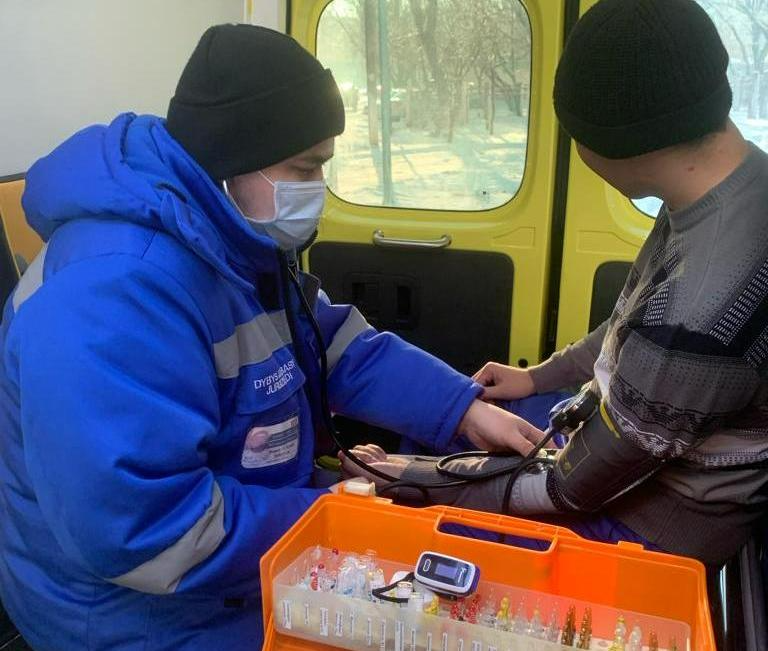
Training of a qualified doctor-specialist in urgent medicine, emergency medical services, medical aviation, with professional competencies, capable and ready for independent activities and the provision of qualified, specialized round-the-clock emergency medical care, with the use of high-tech services, with medical supervision of patients (adults and children ) in healthcare organizations.
What will you learn?
- Methods of diagnosis and principles of therapy at the NSR level;
- Work independently on calls with SMP teams;
- Management of patients with urgent diseases in the emergency department of the hospital;
- Participation in morning conferences;
- Registration of medical documentation;
- Clinical reviews of patients;
- Mastering practical skills in the "workplace";
- Mastering and consolidating skills in the CSC.
- Clinical analysis of patients;
- Participation in medical conferences and consultations, seminars, interdisciplinary webinars and competitions on the basis of the CSC;
- Registration of medical documentation based on compliance with legal knowledge;
- Work in the library, online classes;
- Participation in scientific and practical conferences;
- Writing literary reviews and publishing scientific articles.
- Knowledge of algorithms for diagnosis and emergency medical care in life-threatening and urgent conditions in the clinic of internal diseases, surgical, obstetric and gynecological pathology, injuries, nervous and mental diseases at the prehospital and initial hospital stages, taking into account the level of evidence of diagnostic procedures and therapeutic measures;
- The study of the legislative framework for the organization of emergency and emergency medical care.
Final learning outcomes
- Demonstrates knowledge of diagnostic algorithms and emergency medical care for life-threatening and urgent conditions in the clinic of internal diseases, surgical, obstetric and gynecological pathology, injuries, nervous and mental diseases at the prehospital and initial hospital stages, taking into account the level of evidence of diagnostic procedures and therapeutic measures.
- He is able to collect and evaluate information from the patient and accompanying persons, including non-verbal communication language, demonstrating commitment to professional ethical rules of conduct.
- Demonstrates teamwork skills by applying interpersonal and communication skills, as well as skills in mastering one's own emotions, communicative tolerance to create, develop and continuously improve interprofessional interactions.
- Demonstrates knowledge of medical triage - a triage system for dividing patients/victims into groups depending on the severity of the patient's condition and the urgency of the situation.
- Demonstrates knowledge and skills in assessing the patient's condition, taking care of the patient, creating a safe and comfortable environment for him within the framework of making an appropriate decision on emergency care in the red, yellow, green zones of the emergency department.
- Demonstrates skills in self-transportation and hospitalization of patients for emergency indications, transportation of organs (parts of organs) and body tissues for subsequent transplantation, delivery by air ambulance of qualified specialists to their destination.
- Demonstrates professionalism and professional skills within the framework of prescribing medicines and conducting pharmacotherapy, taking into account indications, contraindications, drug interaction based on evidence-based medicine for life-threatening and urgent conditions in adults and children.
Employment
After completing the educational program, graduates can work in public and private healthcare organizations, such as:
- Emergency Medicine Doctor (adult)
- Emergency Medicine Doctor (children's)
- Ambulance doctor
- Air ambulance doctor,
The field of professional activity:
- healthcare management organizations;
- healthcare organizations;
- educational organizations;
- organizations of science.
