
Anesthesiology and intensive care (adult, children's)
Group of educational programs: R017 Anesthesiology and intensive care (adult, children's)
Cipher: 7R01102
Duration of study: 3 years, 210 credits
Admission conditions: higher medical education, internship, or a document demonstrating the qualification of the «doctor» under the program of higher medical education, doctor's certificate, entrance exam in accordance with the Admission Policy
Tuition fee for 1 year: 2 000 000 tenge

 +7 7212 503930, внутр. 1478
Mission
Training highly qualified specialists in the field of anesthesiology and reanimatology, who are able to plan and implement a range of intensive care measures for patients of different ages with critical impairment of vital functions of the body, depending on the severity of the pathological syndrome, concomitant pathology, with the possibility of using modern information technologies to improve the provision of medical care to the population.
What will you learn?
- Methodology for examining a patient in intensive care before planned and emergency operations;
- Determining indications for transferring patients to and from the ICU;
- Carrying out anesthesia under the guidance of a clinical mentor;
- Monitoring the condition of intensive care patients under the guidance of a clinical mentor.
- Drawing up an intensive care plan for children and adults in the ICU;
- Management of intensive care patients under the guidance of a clinical mentor;
- Carrying out an extended complex of cardiopulmonary resuscitation in patients of various profiles;
- Independently performing all types of anesthesia under the guidance of a clinical mentor;
- Completing documentation in a comprehensive medical information system;
- Predict the condition and possible complications in intensive care patients;
- Independent management of intensive care patients under the guidance of a clinical mentor.
Final learning outcomes
- Diagnoses the leading pathological syndrome that determines the severity of the patient’s condition, determining the nature of the priority specific and successive treatment measures.
- Demonstrates knowledge and skills in calculating the need for fluids, electrolytes, medications, the rate of their infusion for adults and children, taking into account enteral-parenteral nutrition, indications for the subsequent implementation of infusion and/or transfusion of components and blood products and timely diagnosis and treatment of various post-transfusion complications.
- Demonstrates the ability to restore airway patency in adults and children.
- Demonstrates knowledge and skills in examining, preparing and examining patients of various specialties before elective and emergency surgery.
- Identifies in a timely manner indications and contraindications for transferring patients to and from the intensive care unit.
- Demonstrates skills in interpreting the results of clinical and instrumental-laboratory examination of patients, monitoring respiration and blood circulation.
- Demonstrates skills in selecting and prescribing a specific scope of examination for intensive care patients, collecting and analyzing diagnostic and treatment results to make a clinical judgment about the dynamics of the patient’s condition from the point of view of a scientifically based approach.
Employment
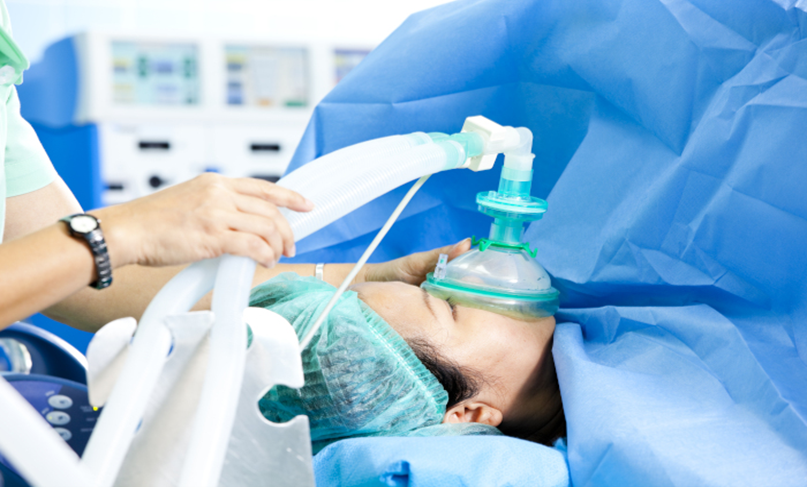
After completing the educational program, graduates can work in public and private healthcare organizations as an anesthesiologist-resuscitator and obtain the right to private practice in accordance with current regulations.
