
Allergology and Immunology (childrens)
Group of educational programs: R003
Cipher: 7R01139 «Allergology and Immunology (childrens)»
Duration of study: 2 years, 140 credits
Admission conditions: possession of a higher medical education degree, completion of internship, or possession of a document confirming the qualification of “physician” under a higher medical education program; a physician’s certificate; and successful completion of an entrance examination in accordance with the Student Admission Policy.
 +7 7212 503930, ext.1459
Mission
Training a pediatric allergist-immunologist capable of independently carrying out prevention, diagnosis, treatment, and medical rehabilitation of children with allergic diseases and immunodeficiency conditions in accordance with the principles of evidence-based medicine.
What will you learn?
- Interpretation of specific laboratory investigations in allergology and immunology.
- Interpretation of data from instrumental diagnostic and monitoring methods (spirometry, peak flowmetry).
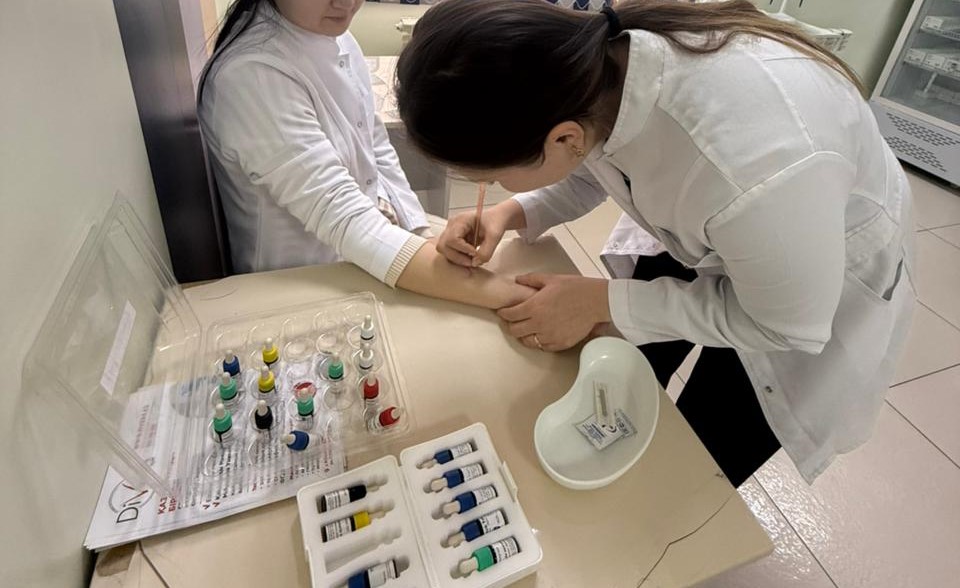
- Performance of skin, intradermal, patch, prick, drop, and specific diagnostic tests.
- Preparation and dilution of allergens and histamine for diagnostic testing.
- Administration of allergen-specific immunotherapy.
- Provision of emergency allergological care in life-threatening conditions, including anaphylactic shock, laryngeal edema, acute toxic-allergic reactions, and status asthmaticus.
- Interpretation of specific laboratory investigations in allergology and immunology.
- Interpretation of data from instrumental diagnostic and monitoring methods (spirometry, peak flowmetry).
- Performance of skin, intradermal, patch, prick, drop, and specific diagnostic tests.
- Administration of allergen-specific immunotherapy.
Final learning outcomes
- Performs professional duties in accordance with current regulatory and legal requirements and engages in effective collaboration with medical staff.
- Assesses the severity of a child’s condition, performs a clinical examination, and determines the sequence of diagnostic and therapeutic actions within the scope of their competence.
- Interprets the results of a comprehensive examination of pediatric patients with allergic and immunological disorders and conducts differential diagnosis.
- Interprets data from specific functional, instrumental, laboratory, and immunological studies and applies these results to adjust the management strategy for pediatric patients.
- Formulates a diagnosis, determines treatment tactics for allergic diseases and immunodeficiency conditions in children in accordance with clinical protocols, evaluates the effectiveness and safety of therapy, and adjusts the treatment plan.
- Provides emergency medical care to children with allergic diseases and immunodeficiency conditions requiring urgent medical intervention.
- Communicates effectively with the child and their parents/legal representatives to achieve mutual understanding and ensure adherence to medical recommendations.
- Develops and implements preventive measures for allergic diseases and immunodeficiency conditions in children and informs parents about strategies aimed at reducing their risk.
- Demonstrates commitment to professional development and continuous self-education, shares knowledge with colleagues, and actively participates in professional community activities such as conferences, seminars, and training courses.
Employment
After successful completion of the educational program, graduates may work in public and private healthcare organizations as pediatric allergist-immunologists and may also obtain the right to engage in private medical practice in accordance with the current regulatory and legal acts of the Republic of Kazakhstan.
