Dentistry
Qualification: doctor
Degree: Master of Medicine
Group of educational programs: ВМ087
Cipher: 6В10115
Duration of study: 6 years, 360 credits
Admission conditions: UNT results with a threshold level of 75 points and above
Major disciplines: biology, chemistry
Tuition fee for 1 year: 1 600 000 tenge
 +7 7212 503930, int.1417
Description of the educational program
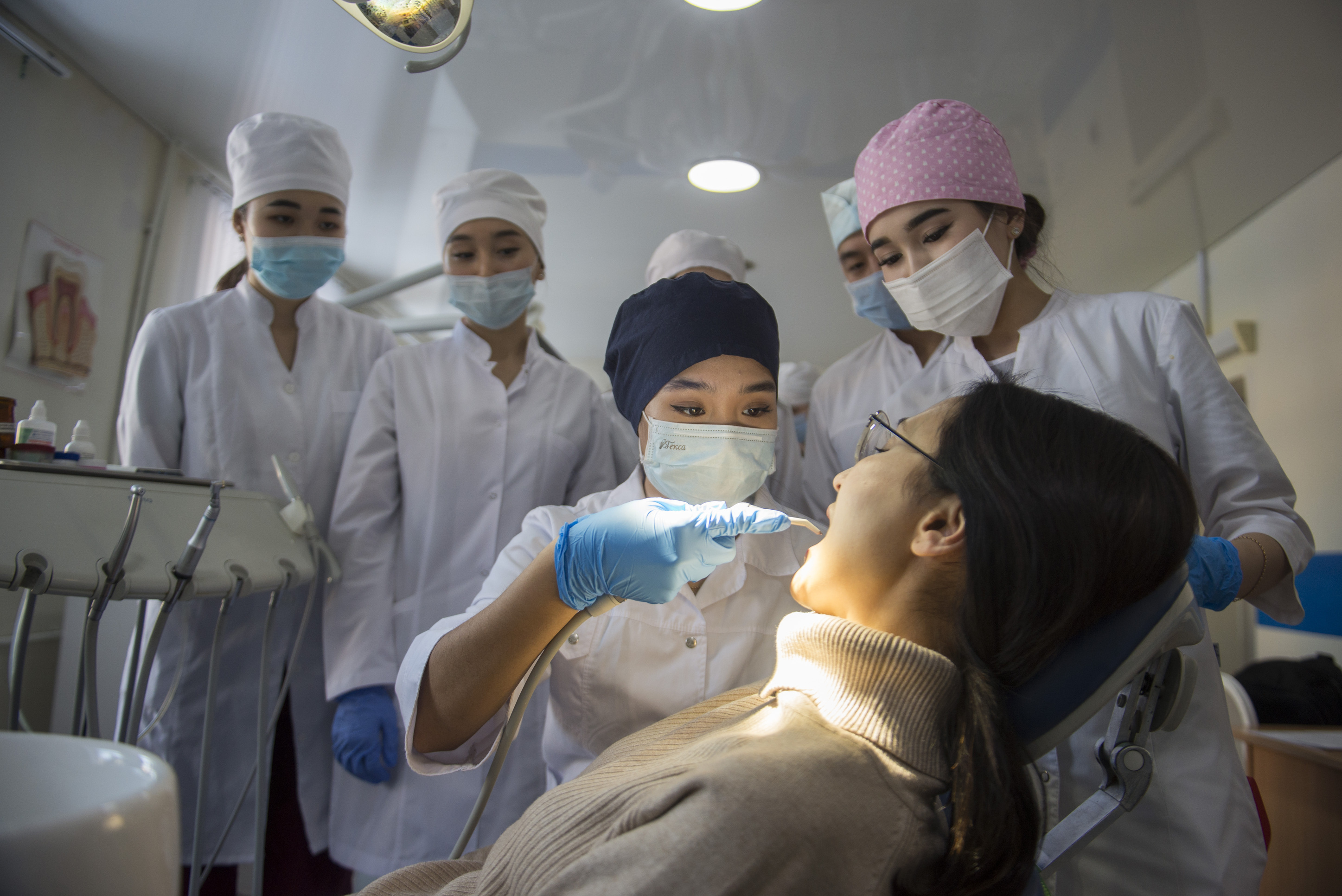
The six-year education is intended to prepare a qualified dentist, master of medicine, capable of implementing successful clinical activities in the field of dentistry. The educational process is organized optimally for mastering and developing the basic competencies of a specialist in the field of dentistry, including the development of scientific and clinical components.
The educational program consists of blocks: general education, basic and specialized disciplines. The training ends with a final certification - writing and defending a master's thesis, preparing and passing a comprehensive exam.
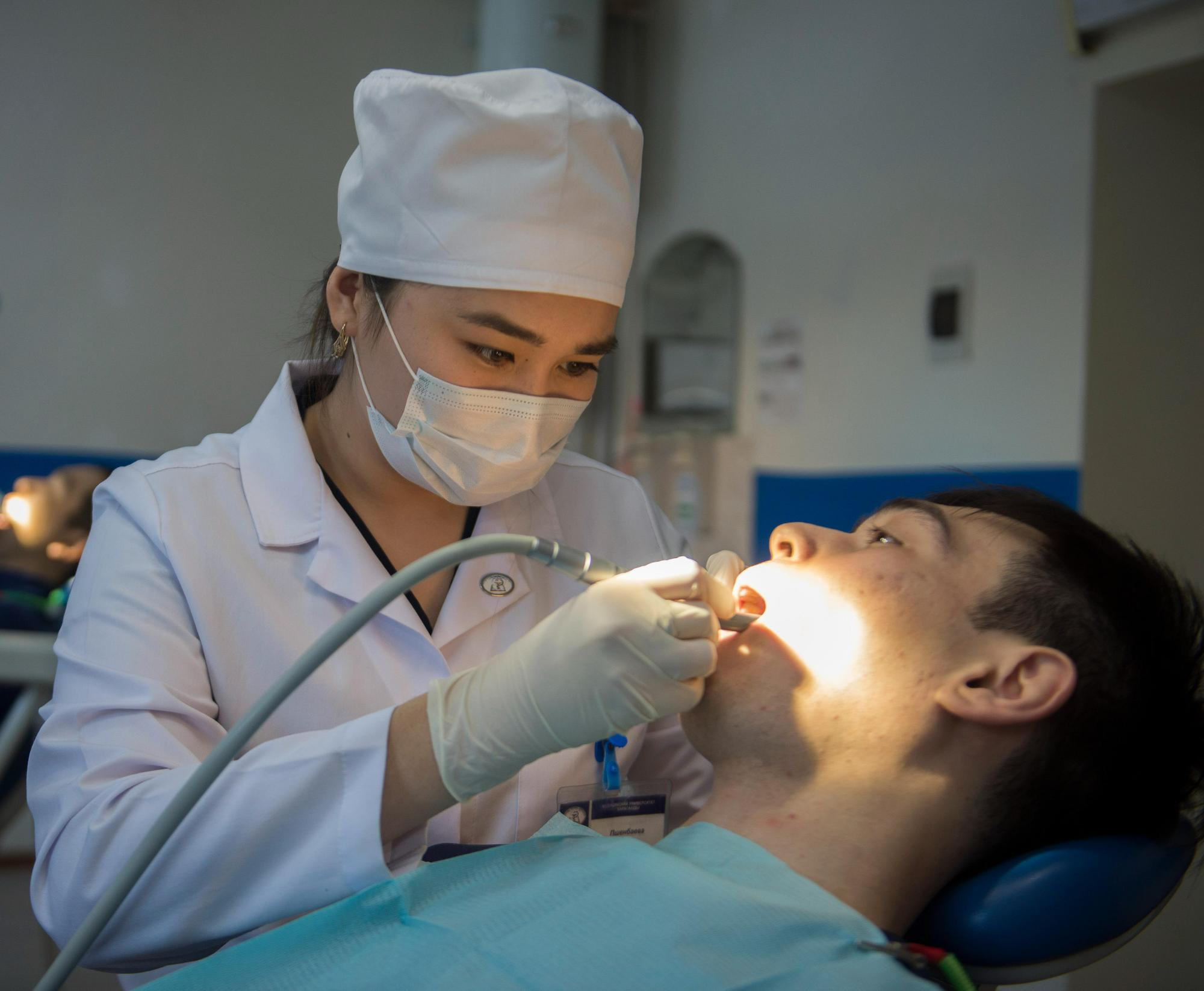
When studying specialized disciplines, special attention is paid to the development of critical thinking and skills of interpersonal and cultural competence, including in a professional environment, which are crucial for the provision of quality medical care.Mastering clinical skills for patient safety begins in the format of simulation training in the Center for Simulation and Educational Technologies; from the third year, immersion into a professional environment is carried out - clinical training in a university dental clinic under the guidance of faculty.
What will you learn?
- integration of knowledge in general educational disciplines,
- taking into account the specifics of medical education
- studying regulatory knowledge and basic disciplines (anatomy and physiology)
- mastering medical manipulations in the conditions of simulation technologies.
- preparation for the first contact with patients continues and the transition to the basics of dental practice is carried out - further development of basic knowledge
- acquisition of knowledge in the basics of scientific thinking
- the basics of dentistry, communication skills and skills in working with dental instruments.
- transition to patient care and immersion in a professional environment - development of scientific thinking
- understanding of diseases of internal organs with the study of symptoms/syndromes
- mastering clinical skills in examining dental patients, preventing dental diseases
- studying the caries process and its complications
- oral surgery issues
- using modern treatment strategies
- pain management using local anesthesia based on knowledge of biomedical sciences
- Improving your professionalism and understanding of patient safety based on regulatory knowledge in the provision of medical care by healthcare entities
- including invasive interventions and high-risk procedures.
- further development of existing clinical skills and knowledge
- continued clinical acquaintance with methods of treating various groups of patients
- including children and patients with special needs
- In the 4th year you will study a number of disciplines in preparation for the more complex restorative dental treatment, clinical endodontics
- At the same time, immersion in disciplines that allow us to understand the pathological processes of various organs and systems, including in pregnant women and children, will continue.
- Teamwork, professionalism, and safe patient management skills continue to develop.
- consolidating the clinical skills and knowledge acquired over 4 years of study
- you will gain a deeper understanding of injuries and tumors of the oral cavity
- the maxillofacial area and surgical aspects of restorative dentistry
- diseases of periodontal tissue, the oral mucosa and the red border of the lips
- including including in childhood, explore ways to solve complex problems of dental restoration
- management of patients with complete absence of teeth, with special attention to the development of a comprehensive treatment plan for the patient, while linking oral health with overall health.
- horizontal and vertical integration in 5 main areas of dentistry: therapeutic, orthopedic and surgical dentistry, pediatric dentistry and orthodontics allow you to form and improve knowledge and skills, including leadership qualities, personal and professional growth.
Final learning outcomes
- Regulatory knowledge
- Communication
- Medical Knowledge
- Research
- Clinical Skills
- Professionalism
- Personal and professional development
Employment
After completing the educational program, graduates can work as a doctor in public and private healthcare organizations and obtain the right to private practice in accordance with current regulations.