
Nursing
Degree: Bachelor of Health Care
Group of educational programs: B084 Nursing
Cipher: 6B10101
Duration of study: 4 years, 240 credits
Admission conditions: UNT results with a threshold level of 70 points and above
Major disciplines: biology, chemistry
Tuition fee for 1 year: 1 220 000 tenge
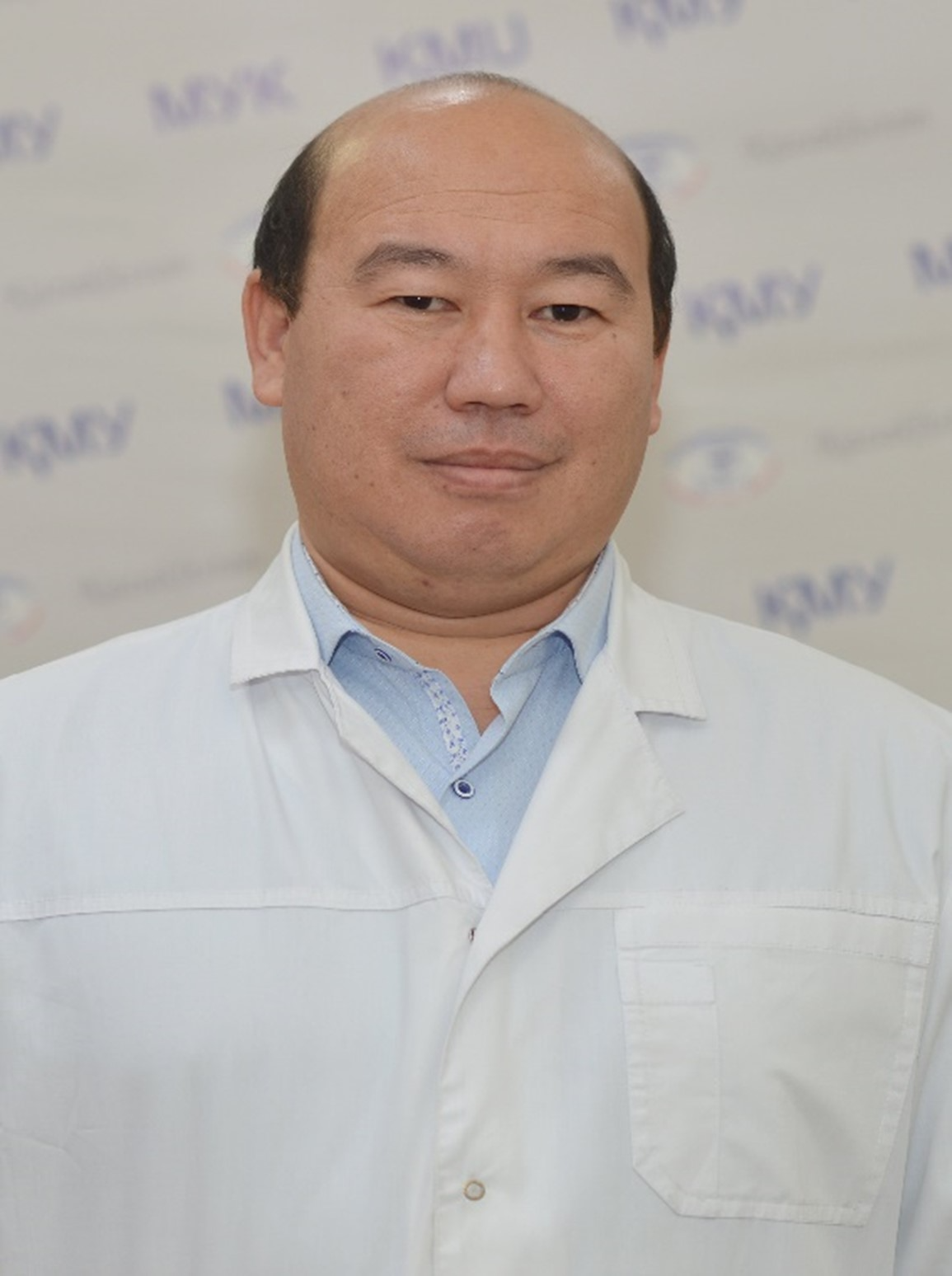
Kalbekov Zhandarbek Abdukhalievich
Head of educational program
 +7 7212 503930, exp.1489
Description of the educational program
The educational program consists of general education, basic and specialized disciplines.
Mission
Training competitive specialists who are able to apply modern medical technologies, adapt to changes in healthcare, and continuously improve their knowledge.
What will you learn?
1st year
- You will know the anatomical structure of a person, in particular the sections of normal anatomy (osteology, myology, splanchology), understand the basics of physiological processes in the body;
- To know the pathogenesis of the main pathological conditions and the causes of their development;
- Organization of the nursing process, collection of medical history, planning of nursing care, maintenance of nursing documentation, administration of medicines, assessment of the patient's condition.
2nd year
- Organization of the stages of the nursing process in surgical diseases, diseases of internal organs, infectious diseases, in obstetrics and gynecology, as well as in pediatrics;
- To provide nursing care and assistance at the outpatient level and as part of an ambulance team.
3rd year
- Able to organize nursing care at home;
- Conducts activities to promote public health;
- Define criteria for mental health, strengthen the commitment of the population to a healthy lifestyle;
- Identify methods and carry out rehabilitation measures depending on the nosology.
4th year
- To educate and motivate patients using patient-centered learning methods to promote a healthy lifestyle and expand their functional capabilities;
- To train future specialists and colleagues in various types of activities aimed at improving the quality, effectiveness and safety of nursing care;
- Learn how to independently provide and evaluate the quality of nursing care and services; independently make a nursing diagnosis using modern theoretical and clinical knowledge based on the principles of evidence-based medicine, implementing health promotion programs for socially significant diseases and evaluating their effectiveness at the individual level, family and population levels;
- To solve communicative tasks in certain situations of communication and professional activity;
- Demonstrate clear, effective and professional communication and interaction with patients, their relatives and colleagues and in different situations;
- To recognize the high value of professional development, the potential of employees and the team, the key principles in leadership necessary for the coordination of teamwork;
- Observe the principles of professional ethics;
- Be able to plan the continuous improvement of their professional development, taking into account the latest achievements of science and technology.
Final learning outcomes
- Demonstrates a scientific outlook and citizenship in his professional activities, actively participating in the formation of the Kazakh model of development during the period of accelerated modernization of the republic in the direction of economic, legal, ideological, cultural, environmental self-sufficiency, based on deep knowledge of the modern history of Kazakhstan, philosophy, current areas of social sciences.
- Solves real communicative problems in certain situations of communication and professional activity through the language being studied, the use of information technology and the development of physical qualities for the intellectual development of human abilities.
- Able to plan for continuous improvement of his professional development, taking into account the latest advances in science and technology, to provide nursing services to individuals/patients, families and groups.
- Follows the principles of professional ethics in order to protect the rights and interests of patients/clients, families and groups, maintaining the atmosphere of the working environment and improving the culture of the organization.
- Analyzes critically and uses reliable, up-to-date, evidence-based information across disciplines.
- Demonstrates clear, effective and professional communication and interaction with individuals/patients, families and groups, colleagues and other professionals in a variety of situations.
- Uses a variety of information and communication technologies in the performance of professional tasks, using a single network of secure medical information.
- Train and motivates individuals/patients, families and groups using patient-centered learning methods to promote healthy living, empowerment, autonomy and self-care in everyday life.
- Able to train specialists in various activities aimed at improving the quality, efficiency and safety of nursing care.
- Applies scientific knowledge, technological advances and professional skills to ensure and promote the safety of individuals/patients, families, groups, staff and the environment.
- Able to independently make a nursing diagnosis using modern theoretical and clinical knowledge based on the principles of evidence-based medicine.
- Recognizes the high value of professional development, the potential of employees and the team, the key principles in leadership necessary for coordinating team work, effectively uses conflict management methods.
- Independently provides and evaluates the quality of nursing care and services provided in accordance with regulatory legal acts.
- Able to analyze the state of health of the population, introducing health promotion programs for socially significant diseases and evaluating their effectiveness at the individual level, family and population levels.
